

AI workslop: the risk of inaction
AI is already everywhere in our organisations. The question is whether it’s making our work better.
AI workslop is communication that looks polished and complete, but that you can’t quite rely on. You’re not sure whether the person who sent it has checked it.
One leader described receiving a paper that looked great. But when they asked its author to stand up the arguments within it, they could not do it.
Work arrives looking complete, but the thinking behind it may not be there.
When AI isn’t guided by a clear direction, a clear question to answer and good data, it fills the gaps with workslop: documents that look finished but aren’t, analysis nobody has checked, poor references, fluff instead of ideas. It takes time to read, time to consider and time to check and fix. Rather than saving us time, it’s eating up much of the little time and resources we have.
This is the same digital maturity problem many organisations already had. AI just makes it bigger.
Slop has always existed.
“Je n’ai fait celle-ci plus longue que parce que je n’ai pas eu le loisir de la faire plus courte.”
I have made this longer than usual because I have not had time to make it shorter.
“I am now too lazy, or too busy to make it shorter.”
“I have already made this paper too long, for which I must crave pardon, not having now time to make it shorter.”
“It will take a long while to make it short.”
Quotes via Quote Investigator.
AI use is growing, and much of it is happening out of sight
desk workers in a US study received AI workslop in the last month
nearly two hours to deal with each one
of managers receive workslop, against 38% of other staff
of charities now use AI, up from 60% in 2024
of UK staff have used AI tools their employer hasn’t approved
of charities have updated their risk register for AI, down from 23%
Sources: Niederhoffer et al., ‘AI-Generated “Workslop” Is Destroying Productivity’, Harvard Business Review, September 2025; BetterUp Labs, 2025; Charity Digital Skills Report 2026 (807 charities); Microsoft UK and Censuswide, October 2025.
Organizations that have unclear AI policies are not stopping people from using AI, they stop them from sharing uses.
Ethan Mollick, One Useful Thing

Five things that could go wrong with AI
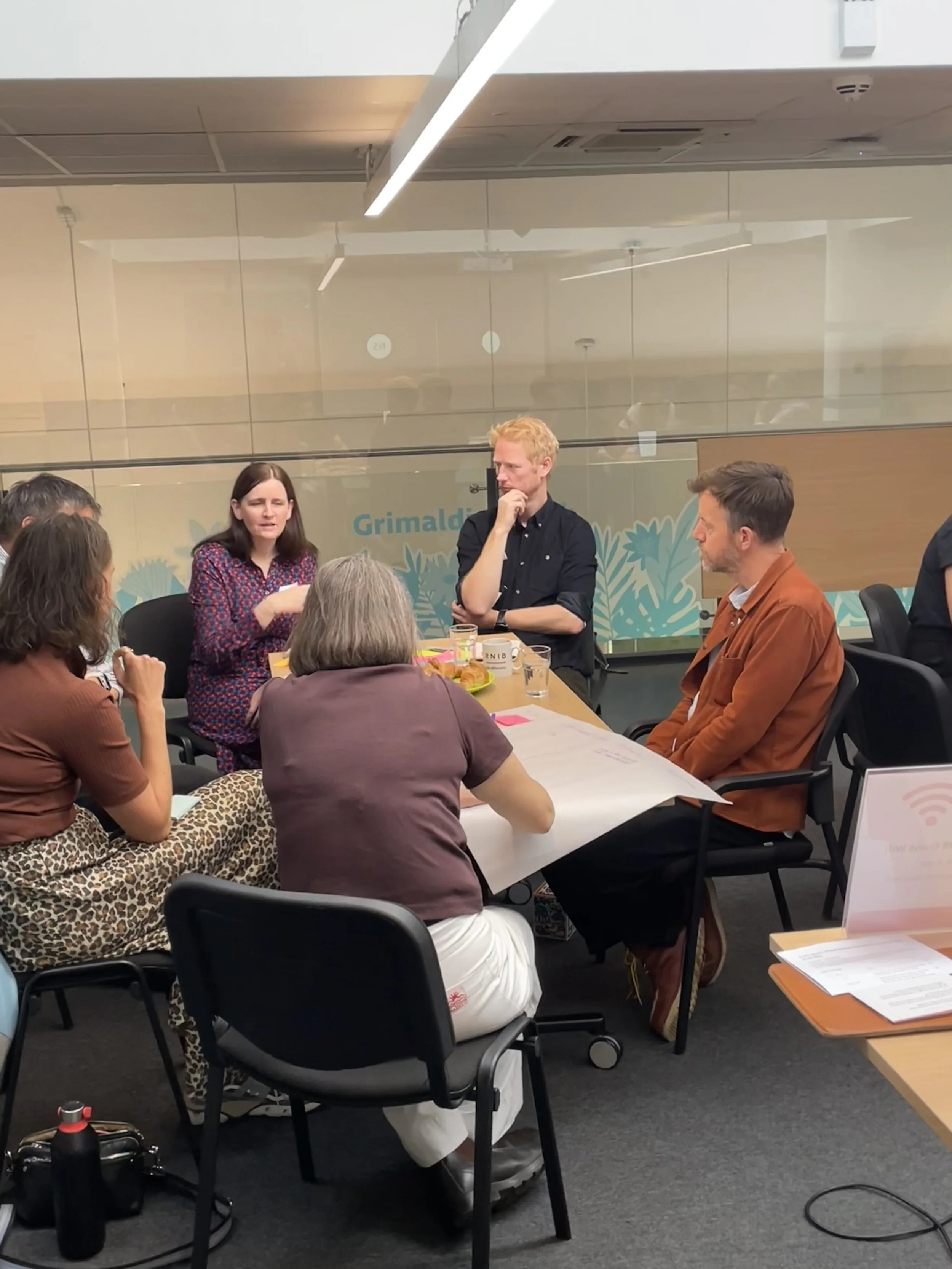
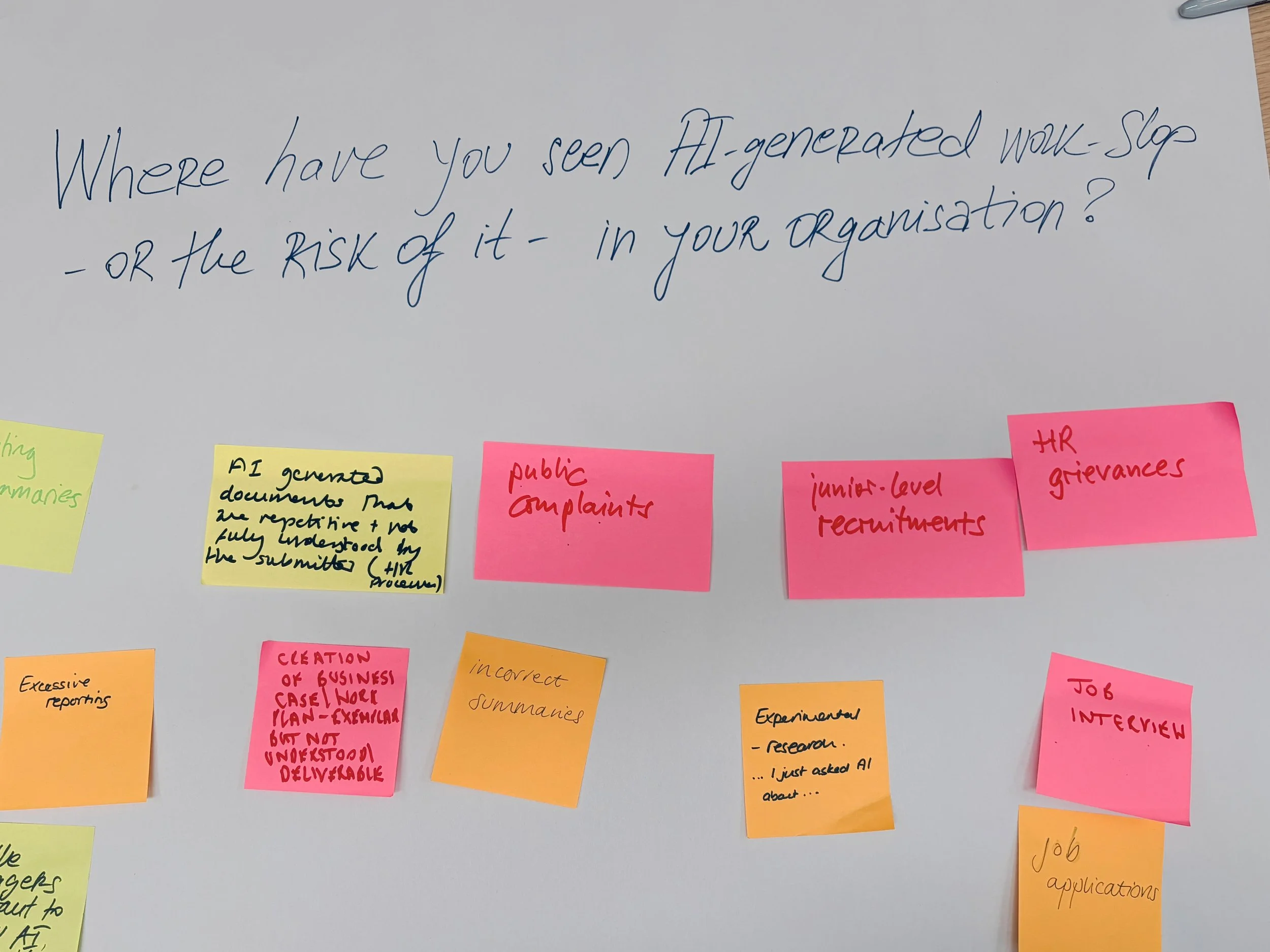
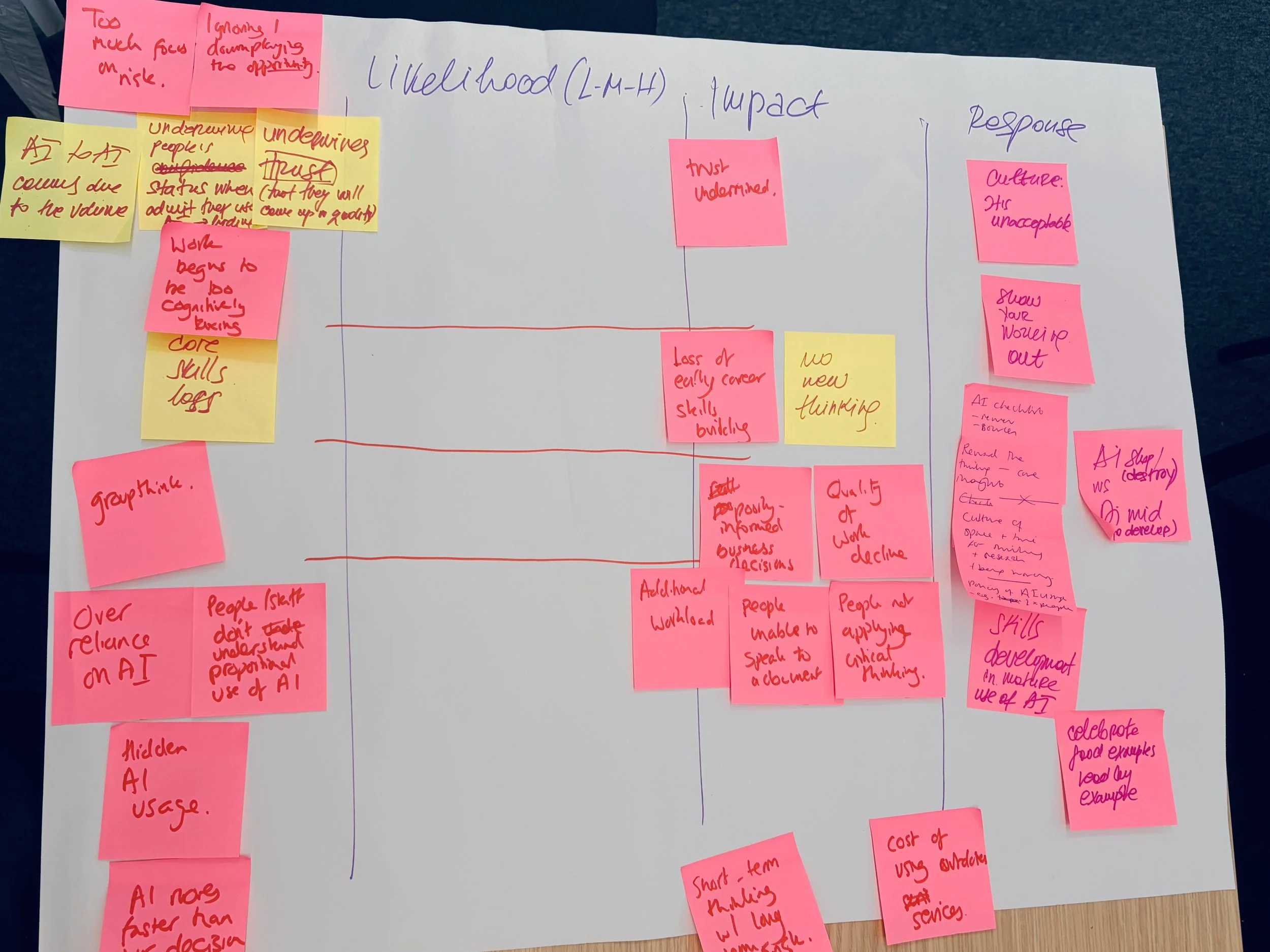
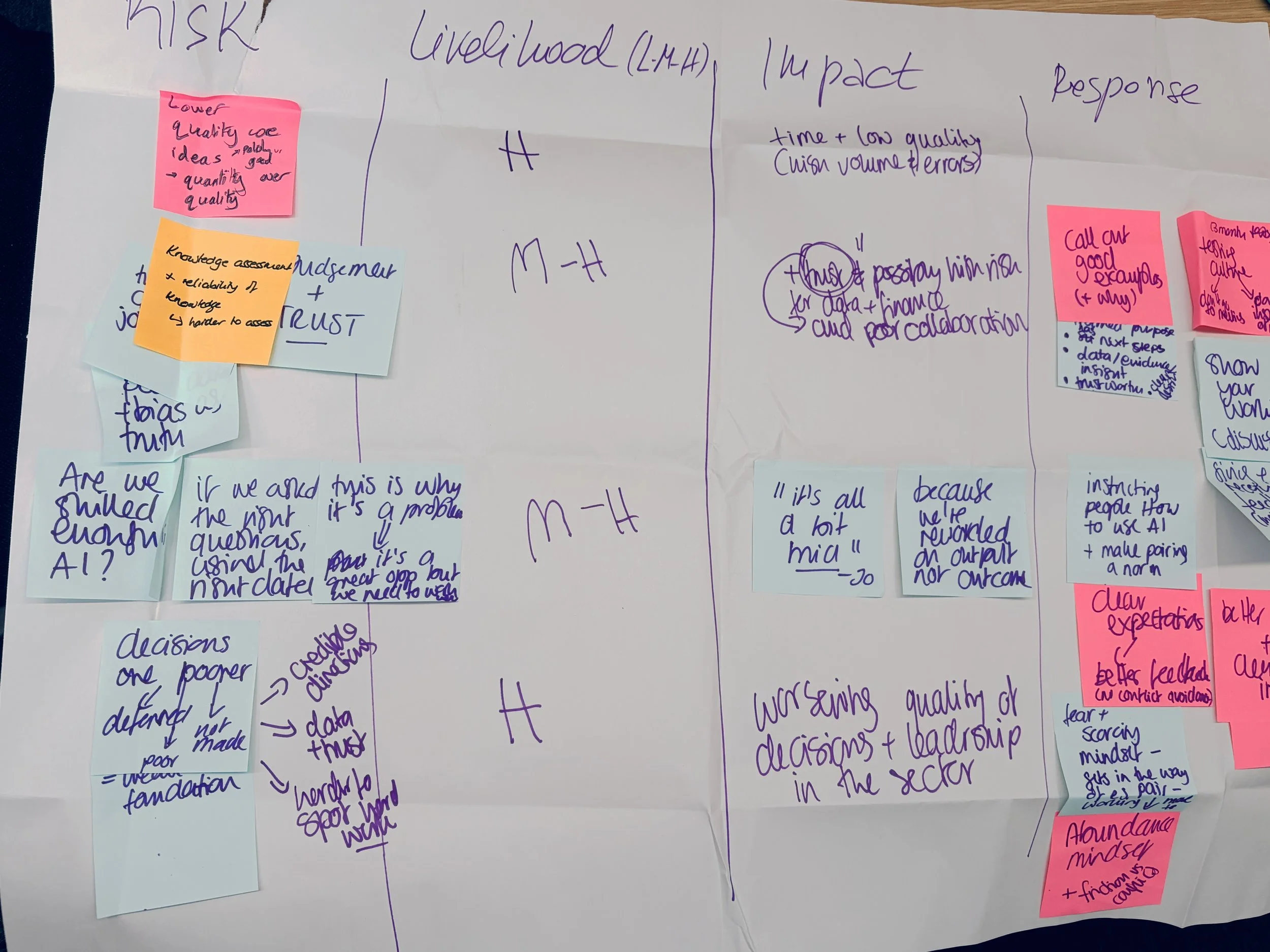
We believe AI workslop is a risk for organisations today, so we worked through the risks with a group of leaders, breaking them down as we would for a risk register. As the focus on risk can have a debilitating effect on engaging with what AI can actually do, we wanted to think about opportunities as much as mitigation.
We’re making it harder to make good decisions
We’re putting decisions off, making them on shaky evidence, or not making them at all. And when something AI has produced looks convincing, it can be surprisingly hard to tell whether the thinking behind it stacks up.
Senior managers lose trust in the information coming to them, especially from their own teams, and being sure of anything means reading in detail.
The risk is that we end up with more information, more documents and less clarity about what to do next.
We’re not very good at getting the best out of AI
AI can do some brilliant things. But it needs good questions, useful data and a bit of skill from the person using it. Too often, those ingredients are missing. As one leader put it, a lot of what we’re getting is “all a bit mid”.
That’s not necessarily a problem with the technology. It’s also about how we work. If we reward people for producing things rather than achieving something useful, why would we expect AI to change that?
AI draws on the same kinds of information from the same sources, so the ideas are more or less the same. That could mean no new ideas and no innovation. And if your information is a mess, AI isn’t going to magically sort it out for you. Our thinking on AI transformation makes a similar point: knowledge management is, in part, “data quality for unstructured content”.
Be clear about what you want. Give people, and AI, a clear question to answer, a purpose to work towards and an outcome you’re looking for.
What you ask for →We’re making more stuff, but not necessarily better stuff
This is the workslop problem. We can produce more content, more quickly, but that doesn’t mean we’re producing more value. Our core ideas, the gold, risk getting lost in a growing pile of output. Errors and bias creep in. And the time we thought we’d saved gets eaten up checking, correcting and making sense of it all.
Research shows it can take nearly two hours to sort through workslop. And workslop can take only a few minutes to produce. So much for the productivity gains.
The same suspicion holds people back from using AI at all. Checking AI output can feel like creating more work than it’s worth. But AI is going to be part of our day-to-day working lives and we need to mature in how we’re using it. Just opting out is de-skilling our workforce.
Take a look at what you’re producing. Are you creating the right pieces of content, in the right amount?
What you invest in →Rather than saving us time, it’s eating up much of the little time and resources we have.
It’s getting harder to know who, and what, to trust
When applications, emails and reports are all AI assisted, how do we know whose thinking we’re actually seeing? Recruitment is a perfect example of how AI has broken a process and undermined trust. Candidates use AI to write an industrial number of applications which match the keywords of job descriptions. HR uses AI to sift and shortlist the massive volumes of applications. We now have AI assessing the work of AI.
With so many applications to get through, the fallback becomes people you know, or judging candidates by the organisation they used to work for and the job they did there.
There are wider risks, too. Reputations can be damaged, and mistakes in areas such as data and finance can have serious consequences. We need to think carefully about where we trust AI, where we need human judgement, and how we tell the difference.
Build in a sense check. Before anything is shared, someone needs to check that it makes sense, the evidence stacks up and the content is fit for purpose. Whoever sends it owns that responsibility.
The anti-slop checklist →We’re getting more exhausted, and our teams are pulling apart
This came up again and again when we worked through the risks with a group of leaders, even though it didn’t make our original risk register. For some people, AI is creating more work, not less. There’s more to review, more tools to navigate and more switching between tasks. It’s exhausting. Meanwhile, teams are starting to divide into those who are enthusiastic about AI and those who are wary of it, or simply don’t want to use it.
AI isn’t just a question of learning new skills. It’s a question of identity, too. One of the deepest questions is: “who am I professionally, when AI does part of what I did?” A training course won’t resolve that. We need to make space for the conversations and redefine where we bring the most value. See H3 in our AI transformation paper.
Bring everyone along. Make space for people who are excited about AI, those who are sceptical and those who are worried about what it means for their role. Name the identity question rather than pretending it’s just about training.
What you invest in →
What you ask for, what you reward, what you invest in
Most of the answers aren’t about buying better AI tools or sending everyone on another training course. They’re about how we work together.
What you ask for
- Be clear about what you want. Give people, and AI, a clear question to answer, a purpose to work towards and an outcome you’re looking for. Instead of “please do me a paper on X”, say who the audience is and what to bear in mind about that audience. Say how long it should be, the structure you’d suggest and the main message you need to get across.
- Ask to see the working. What went in? What prompts were used? A well-made two-page document is great. But follow it with a half-hour conversation where you can ask in-depth questions about any part of it.
- Focus on outcome, not output. For example: we’ll know you’ve done this right if the board gets it and asks the right questions, not because there are three papers. Or - this paper or a part of it is for you to implement, so are you comfortable with everything in it?
- Build in a sense check. Before anything is shared, someone needs to check that it makes sense, the evidence stacks up and the content is fit for purpose. Whoever sends it owns that responsibility.
- Define what good looks like. Be clear which behaviours are acceptable and which aren’t. One leader put it simply: AI workslop should be unacceptable.
What you reward
- Celebrate the good stuff, and explain why it’s good. Help people understand what useful, thoughtful work actually looks like.
- Give good feedback, not just good briefs. Get comfortable with a bit of friction. If something isn’t good enough, say so. It’s closer to a coaching role: when you ask “tell me how you worked this out”, you’re coaching people into deeper thinking and research.
- Make room to do things properly. AI has increased the speed of work, so it feels like more needs to be done in less time. Sometimes people produce slop simply because they don’t have time to go back through it. Making space to think, reflect and evaluate the output is necessary. Rushing out more work because everyone’s under pressure rarely makes things faster in the long run.
- Lead by example. Stop and reflect. Admit mistakes. Be open about saying “I don’t know” or “I tried this and it didn’t work”, and share those lessons.
- Keep repeating yourself. We’re all going to need reminding. Changing how we work takes more than one announcement or a slide in a team meeting.
What you invest in
Pairs working together with AI did best of all. 776 Procter & Gamble staff worked on real product-development problems, alone or in pairs, with or without AI.
Source: Dell’Acqua, Mollick, Lakhani et al., ‘The Cybernetic Teammate’, NBER working paper w33641, 2025 (table 10)
- Move skills on from experimenting to collaborating. A lot of AI use is still experimental, with people playing around to see what it can do. The next step is learning how to collaborate with AI to produce better work. Get people working in pairs: learning to use AI well is easier when you have someone to think with, challenge your assumptions and sense check the result.
- Develop the mid-slop. Not everything that reaches you is slop. Some of it is okay: not amazing, but middle of the road. We called this mid-slop. The people producing it are capable, and the opportunity is to develop them so the quality of their work is higher.
- Teach people how to design processes, not just use tools. This is particularly important for newer staff, who may have less experience of how the work fits together.
- Take a look at what you’re producing. Are you creating the right pieces of content, in the right amount? Or are you churning out content because that’s what makes you look busy or moves work on meaningfully?
- Experiment with stopping things. One organisation described choosing something, such as a regular meeting, and stopping it for three months. If nothing goes wrong, they keep the time.
- Bring everyone along. Make space for people who are excited about AI, those who are sceptical and those who are worried about what it means for their role. Name the identity question rather than pretending it’s just about training.
Our AI anti-slop checklist
Emails, documents, reports, meeting papers, Slack threads, project updates: everything your organisation writes for itself.
Says what it’s for: inform, decide, persuade or record.
The ask and the answer before the background.
Summary, headings and a hierarchy a busy reader can navigate.
No longer to look substantial, no shorter to look decisive.
Status, owner and date, so it can be found and trusted.
AI is a transformation challenge, not a tech rollout
AI didn’t invent workslop, poor decisions or siloed working. It exposes the problems we already have and can multiply them at speed.
If our strategy, processes, data or culture aren’t right, AI won’t fix them for us. We’ve learned from ‘the digital transformations’ we went through over the last decade that technology alone doesn’t solve people and culture problems. Let’s not repeat the same mistakes, only faster.
Technology moving fast doesn’t mean the problems disappear. AI workslop, the lack of adoption it causes, the loss of trust and the way our communication has deteriorated are all live issues. They won’t go away because technology is better. In transformation, the challenges were always less about the technology and more about how it changed processes and people’s skills. With AI, it’s exactly the same. The big difference is speed.
You’re probably already managing the risk. The opportunity is yours to lead.
- 1
Does our culture reward work that looks substantial, or work that’s useful?
- 2
Who is responsible for how we work: the whole system our knowledge and content run on, and how AI feeds into it?
- 3
Are we doing enough to take the opportunities AI gives us: to think more clearly, create more useful work and collaborate better?
What could you change in what you ask for, reward and invest in, so your people produce better work, not just more of it?
Drawn from our roundtable The price of inaction (RNIB, Monday 12 October 2026), presentations by Nick Scott and Julius Honnor (Contentious), and write-ups by Brani Milosevic and Carmen Barlow.
This page was created with the help of Claude (Anthropic’s AI), which helped us bring our writing and presentations together in this layout. The words, and the responsibility for them, are ours.