
AI workslop: how leaders can shape a better culture
In October, we at the Charity Change Collective brought together a group of charity executives to talk about AI work slop. The organisations in the room ranged from animal welfare to international development and health. Remits were just as varied: advocacy and policy, fundraising and operations directors. It made for a really good mix of perspectives.
What we mean by AI work slop
AI work slop is communication that looks polished and complete, but that you can't quite rely on. You're not sure whether the person who sent it has checked it.
One participant described receiving a paper that looked great. But when they asked its author to stand up the arguments within it, they could not do it.
The risks
We believe AI work slop is a risk for organisations today, so in the session we broke it down as we would for a risk register.
The first risk is trust. Work arrives looking complete, but the thinking behind it may not be there. Senior managers lose trust in the information coming to them, especially from their own teams, and being sure of anything means reading in detail.
The same suspicion holds people back from using AI at all. In the past few weeks I've heard from different people, from HR to executive directors, that checking AI output feels like creating more work than it's worth. Our colleague Nick Scott shared a stat that it can take up to two hours to sort through AI workslop which was produced in minutes. But AI is going to be part of our day-to-day working lives and we need to mature in how we're using it. Just opting out is de-skilling our workforce.
Recruitment is a perfect example of how AI has broken a process and undermined trust. Candidates use AI to write an industrial number of applications which match the keywords of job descriptions. HR uses AI to sift and shortlist the massive volumes of applications. In a process that is all about people, their experience and specific knowledge, we now have AI assessing the work of AI. It undermines the good things about recruitment, such as equal opportunities approach. With so many applications to get through, the fallback becomes people you know, or judging candidates by the organisation they used to work for and the job they did there.
The same pattern of AI talking to AI shows up elsewhere. A long document arrives in response to an HR process, or a membership organisation receives a complaint letter drafted by AI. Because the volume of these papers has also multiplied massively, the recipient needs AI to extract the top points from reams of text.
Finally, AI draws on the same kinds of information from the same sources, so the ideas are more or less the same. That could mean no new ideas and no innovation. But this is really a skills issue: sharing the first thing AI comes up with after a prompt will not do.
Responses: what you can do as a leader
The first response was to change the conversation. Charities are very focused on risk, and that focus can have a debilitating effect on engaging with what AI can actually do. So the responses that came out of the room are about opportunity as much as mitigation. So what can be done? Below are ideas from participants, in response to prompts from our colleague Julius Honnor.
What you ask for
Brief better. Instead of "please do me a paper on X", say who the audience is and what to bear in mind about that audience. Say how long it should be, the structure you'd suggest and the main message you need to get across.
Ask to see the workings out. A well-made two-page document is great. But follow it with a half-hour conversation where you can ask in-depth questions about any part of it.
Focus on outcome, not output. For example: we'll know you've done this right if the board gets it and asks the right questions, not because there are three papers. Or - this paper or a part of it is for you to implement, so are you comfortable with everything in it?
Define what good looks like. Be clear which behaviours are acceptable and which aren't. One participant put it simply: AI work slop should be unacceptable.
What you reward
Celebrate good examples.
Give good feedback, not just good briefs.
Give people time to think. AI has increased the speed of work, so it feels like more needs to be done in less time. Sometimes people produce slop simply because they don't have time to go back through it. Making space to think, reflect and evaluate the output is necessary.
Lead by example. Stop and reflect. Admit mistakes. Be open about saying "I don't know" or "I tried this and it didn't work", and share those lessons.
What you invest in
Move skills on from experimenting to collaborating. A lot of AI use is still experimental, with people playing around to see what it can do. The next step is learning how to collaborate with AI to produce better work. Used well, it can be a fantastic companion for creativity and new ideas. These are learnable skills.
Develop the mid-slop. Not everything that reaches you is slop. Some of it is okay: not amazing, but middle of the road. We called this mid-slop. The people producing it are capable, and the opportunity is to develop them so the quality of their work is higher.
A different way of leading
For me, all of this adds up to a different way of leading. It's closer to a coaching role: when you ask "tell me how you worked this out", you're coaching people into deeper thinking and research.
It's about culture, and it can't wait
Although we were talking about AI, almost every response was about culture, behaviour and skills.
One participant asked an important question: AI is moving so fast, so how relevant will issues like AI work slop be in six months' time?
This is where we can learn from transformation. Technology moving fast doesn't mean the problems disappear. AI work slop, the lack of adoption it causes, the loss of trust and the way our communication has deteriorated are all live issues. They won't go away because technology is better. Technology never solves cultural and people issues.
In transformation, the challenges were always less about the technology and more about how it changed processes and people's skills. With AI, it's exactly the same. The big difference is speed.
If we don't get on the front foot on the AI work slop now, we won't be ready for the next challenge from AI coming down the road. And there will certainly be something new next year.
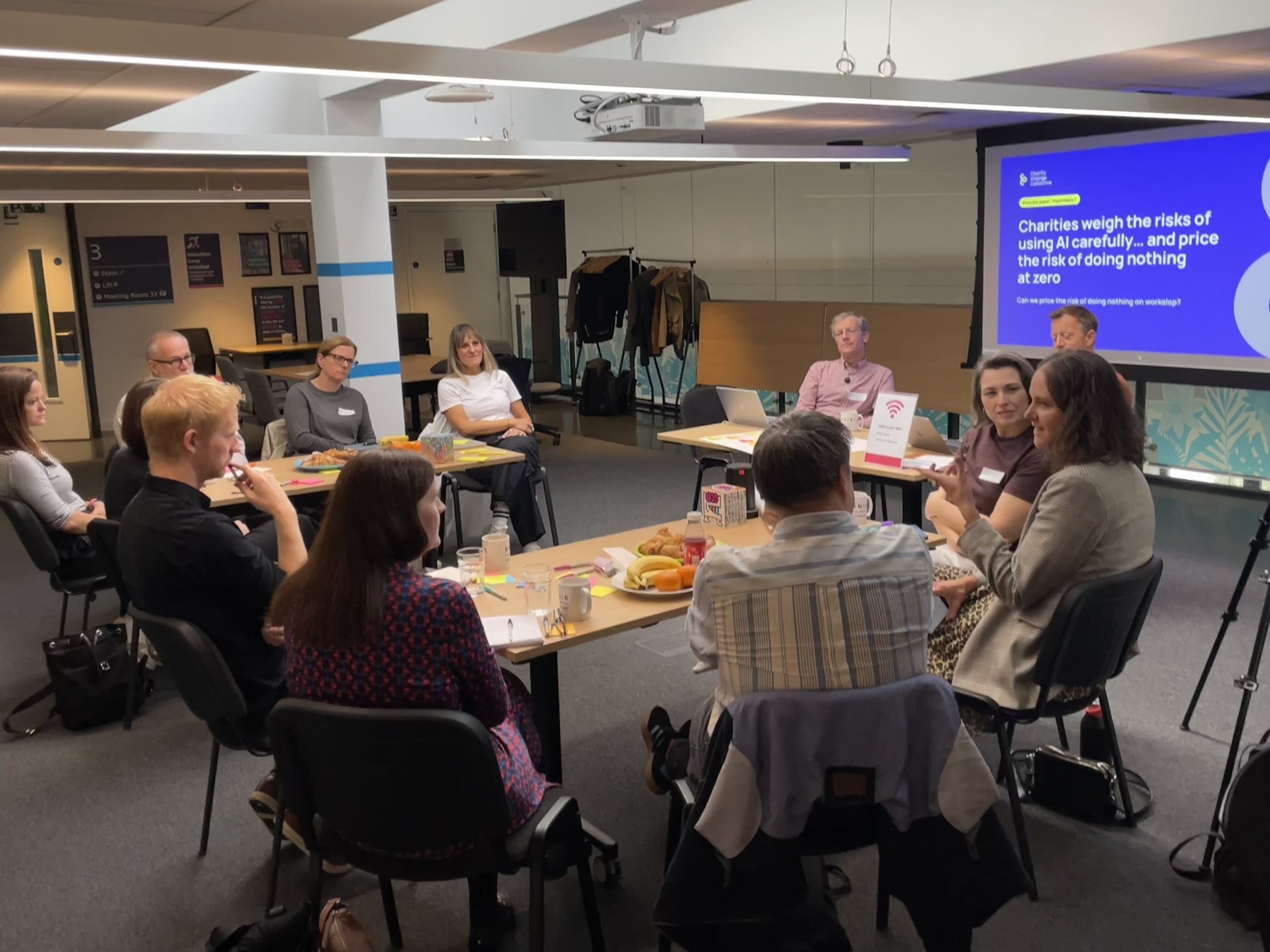
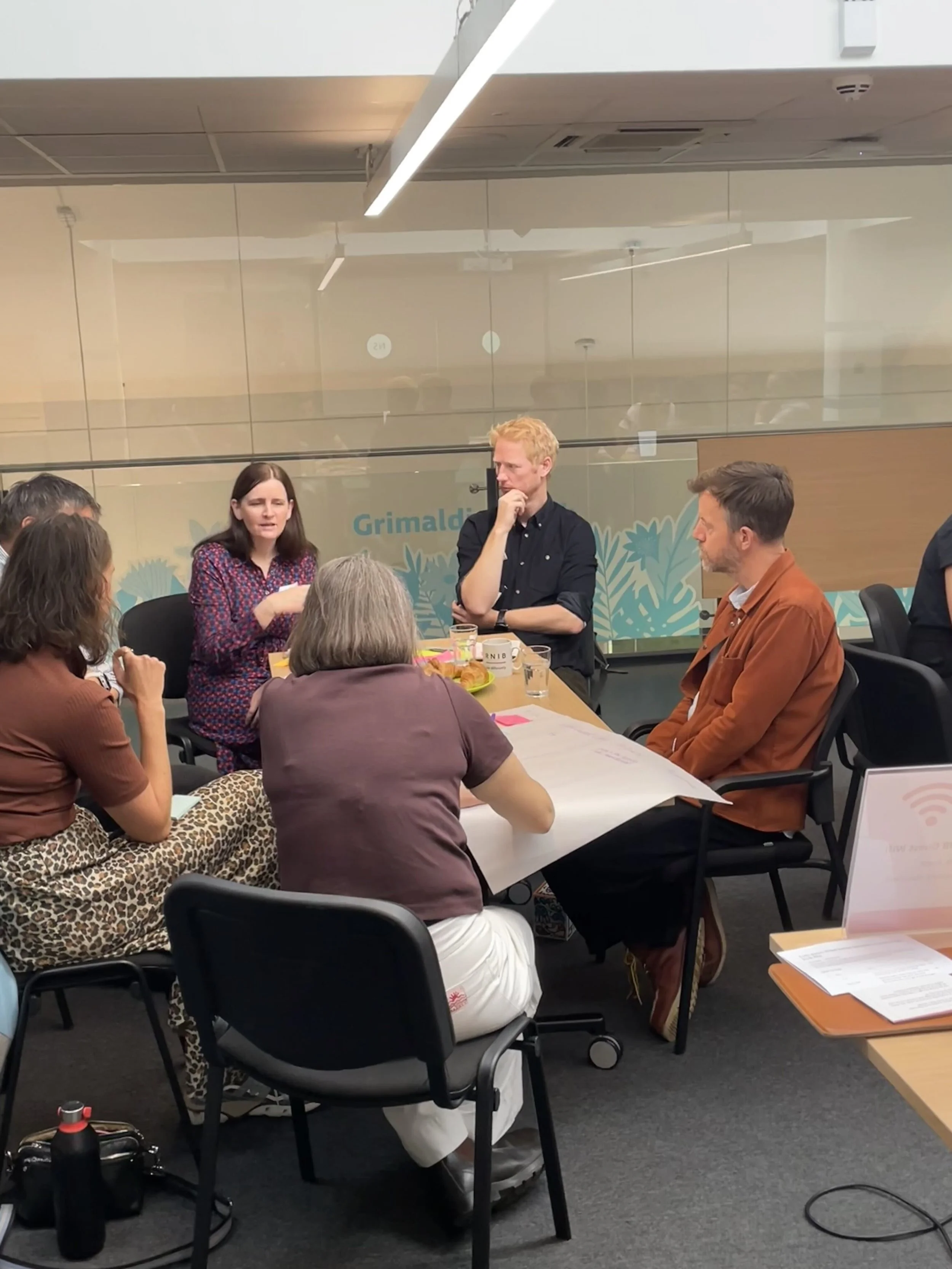
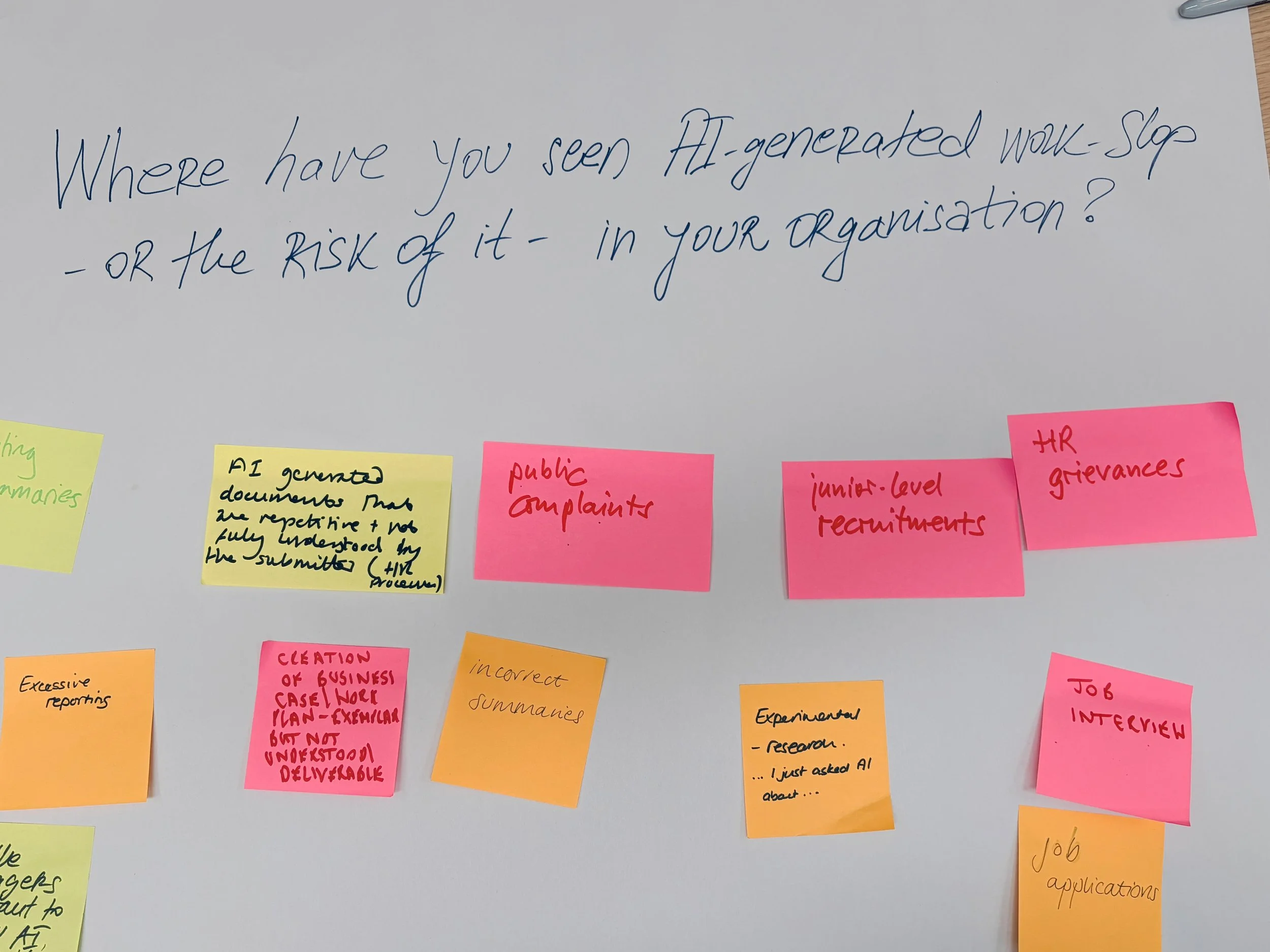
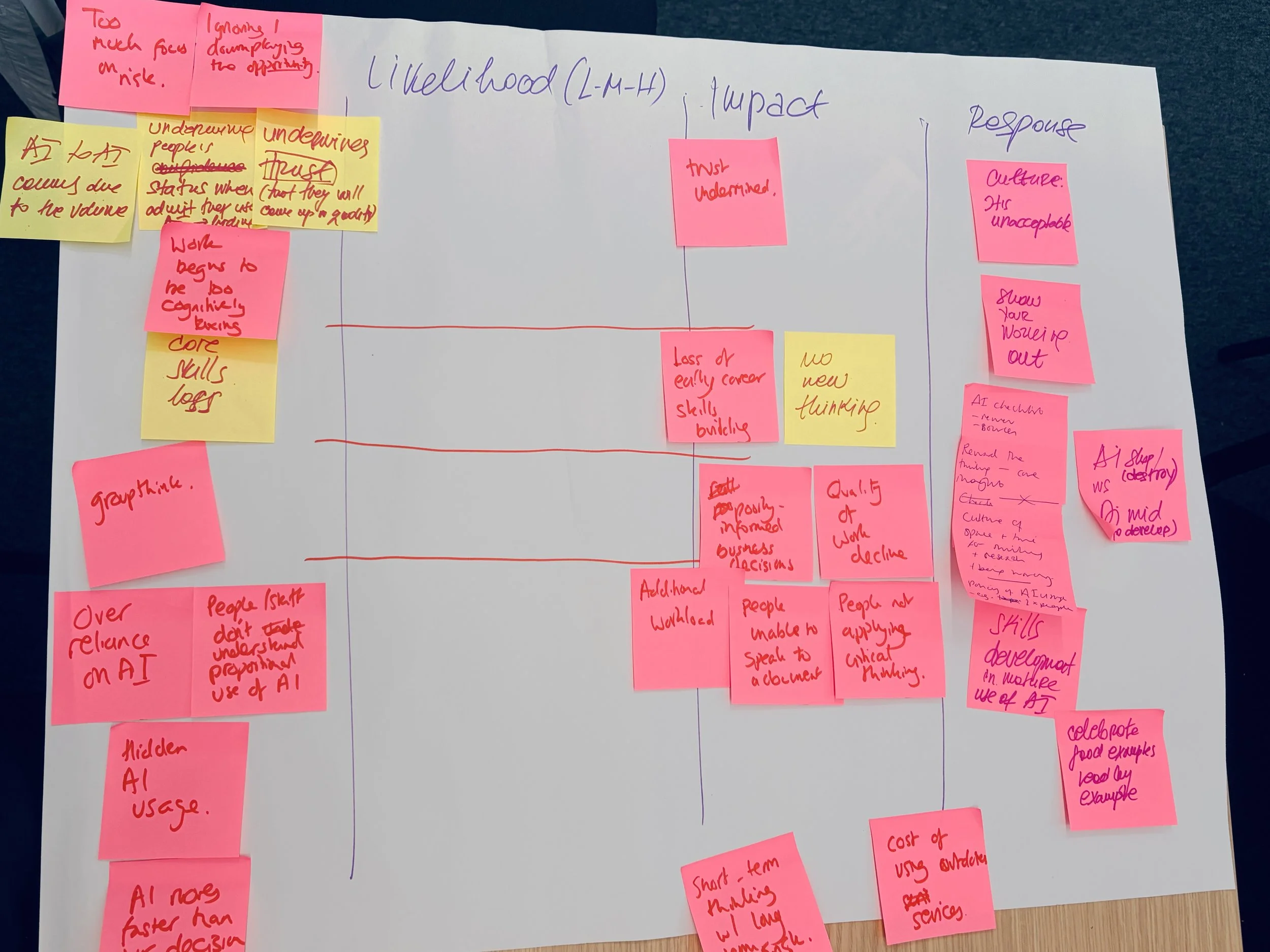
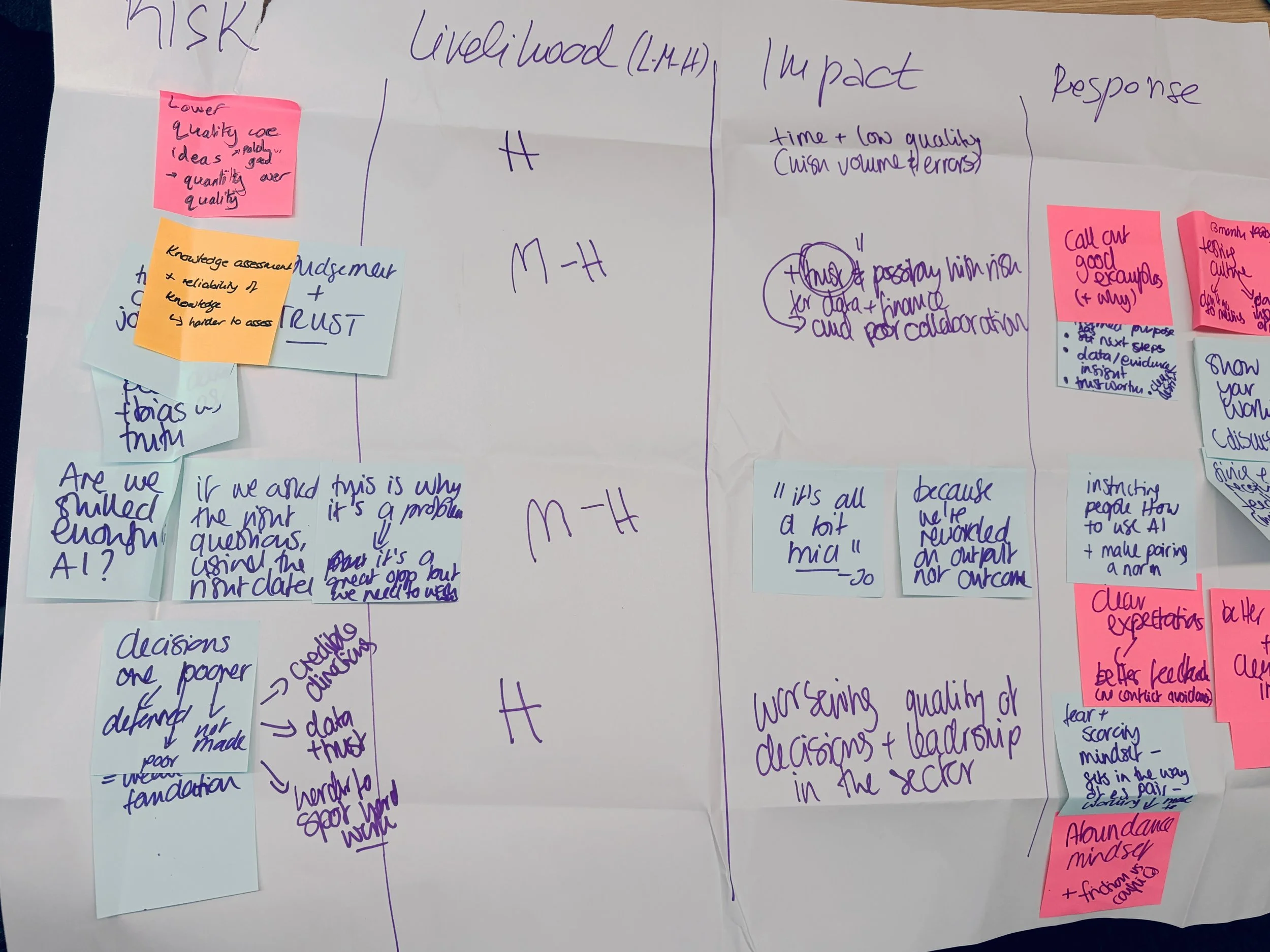
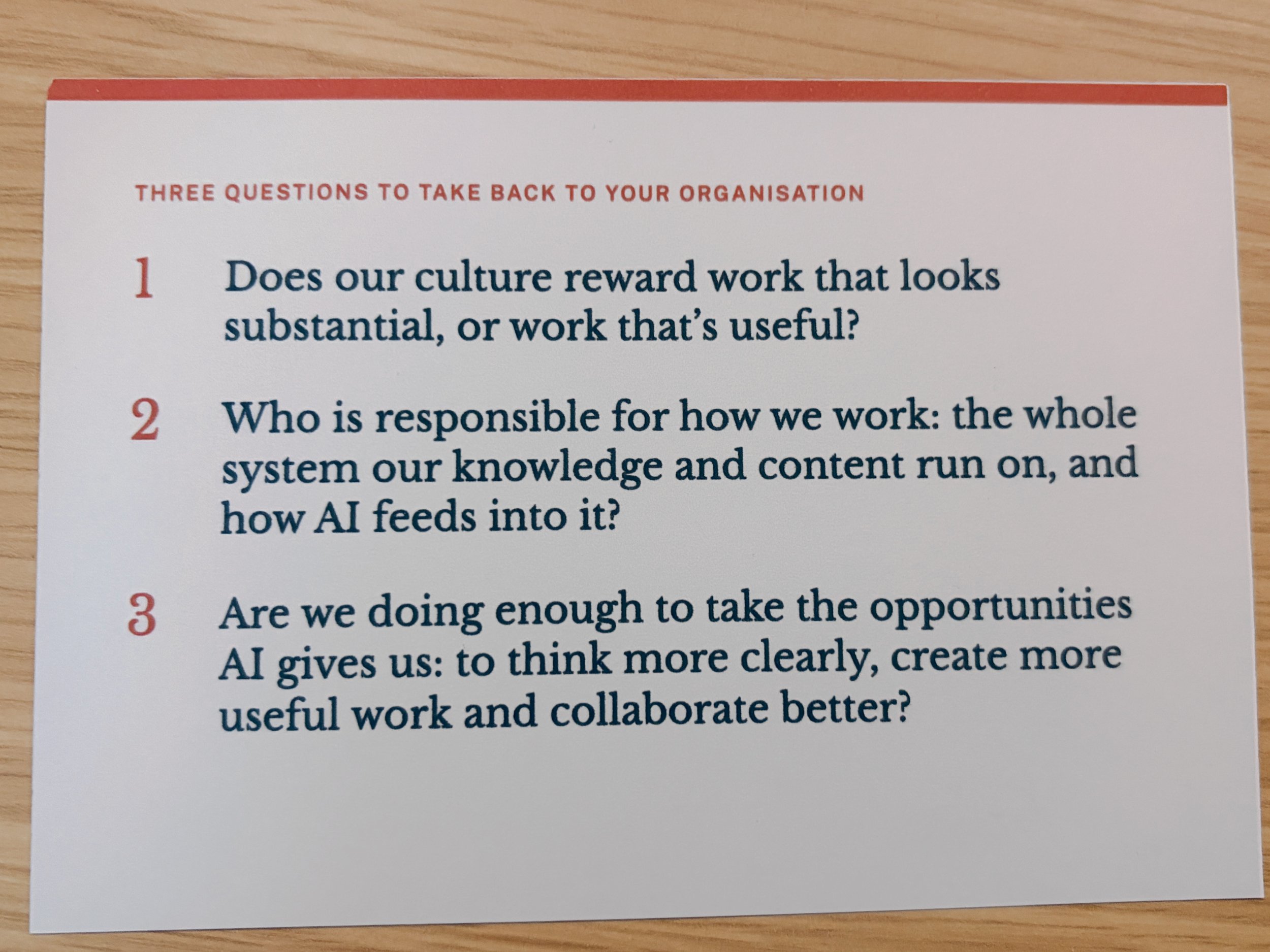
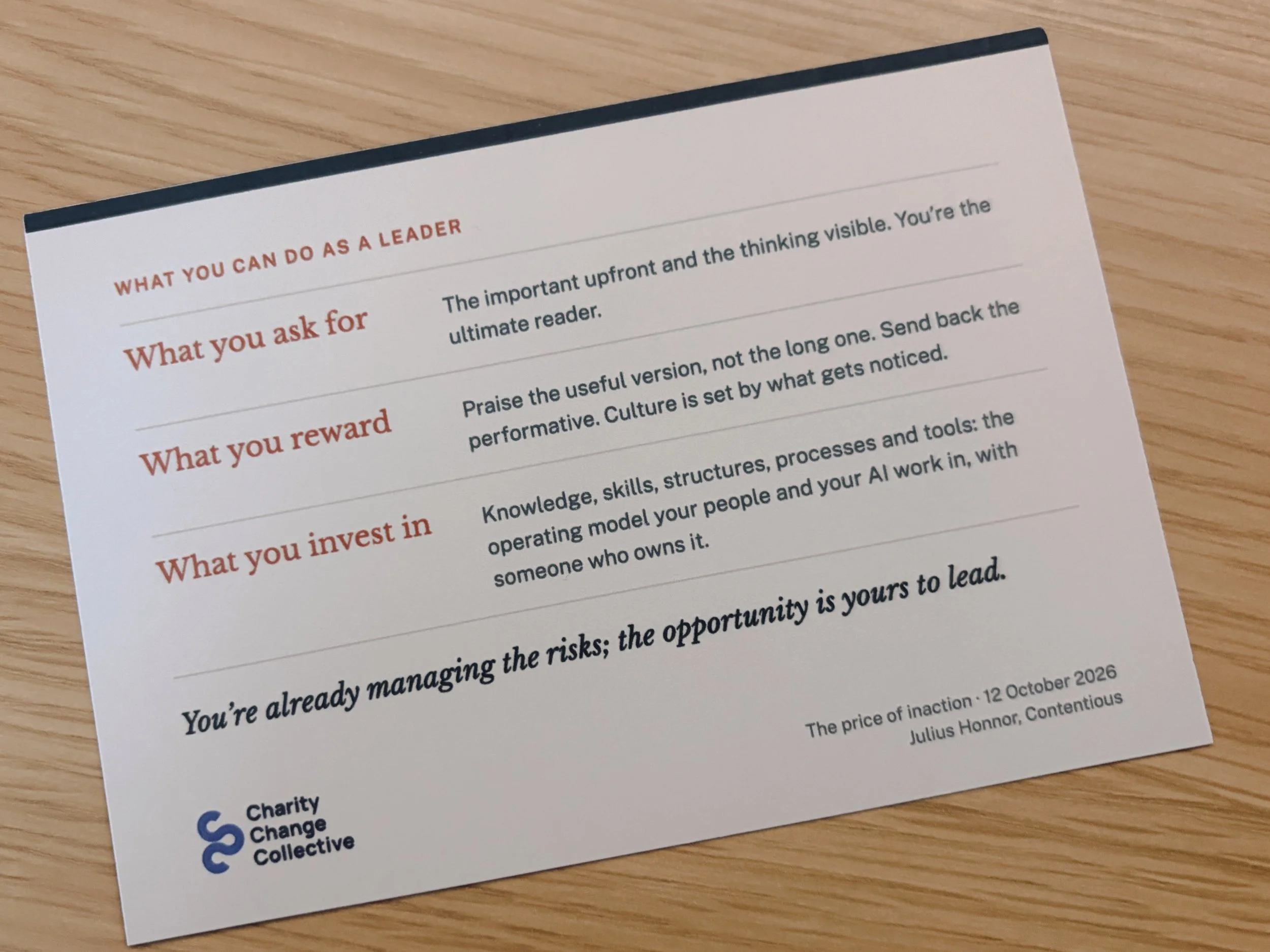
Photo descriptions:
Charity executives from across the sector came together to discuss AI work slop.
Small-group discussions brought together leaders with different remits, from policy to fundraising and operations.
We started by asking where participants had seen AI-generated work, or the risk of it, in their organisations. Examples ranged from HR processes and public complaints to job applications.
We mapped the risks on a risk register by likelihood, impact and response.
Most risks were rated medium to high or high likelihood, with impacts including loss of trust and poorer decision-making.
Three questions we left with participants to take back to their organisations.
What you can do as a leader card: what you ask for, what you reward and what you invest in.